
Vision & Concept
A way of living drawn from the desert
Conceived around five thousand years of Al Ain's heritage and the science of the biological clock — a place that moves with the rhythms of the day.
The intention
A landmark ultra-low-density sanctuary in the heart of Al Ain, drawing on five thousand years of Islamic heritage, the ancient orientation principles of the Qibla, and the natural grandeur of the desert. Conceived around the science of the biological clock, its spaces are designed to move with the rhythms of the day.
- 334 hectares
- Total site area
- 98%
- Native planted species
- 55+ km
- Shaded car-free trails
- 100%
- TSE water irrigation
- 3 phases
- Development structure
Guiding pillars
Four commitments that shape every decision
Not amenities, but principles — held in balance across the life of the community.
Heritage Stewardship
Harmonising more than five thousand years of Al Ain's Islamic heritage and archaeological legacy with a restrained, contemporary way of living.
Holistic Wellbeing
A design rooted in circadian biology and biophilic principles — spaces that support hormonal balance, deep rest and a calmer mind.
Sustainable Luxury
Net-positive ecological strategies: rammed-earth construction, passive cooling, closed-loop water and a landscape planted overwhelmingly with native species.
Economic Vitality
A phased, self-funding model that generates long-term, diversified value for the Al Ain region and its community.
Wellbeing by designThe Biological Clock
Designed around the rhythms of the day
Every cell in the human body operates according to circadian rhythms — internal clocks that regulate sleep, hormone production, metabolism, and countless other functions. The master clock, located in the suprachiasmatic nucleus (SCN) of the brain, synchronizes these rhythms with the external world.
Light as the Master Signal
The SCN receives its primary timing signal from light entering the eyes. Bright light, especially in the blue spectrum, signals daytime and suppresses melatonin production. Darkness triggers melatonin release, preparing the body for sleep.
The Modern Disruption
Contemporary life disrupts these ancient rhythms. Artificial lighting extends the day indefinitely. Screens emit blue light late into the evening. Climate control eliminates the natural temperature variations that once reinforced circadian patterns. The result is an epidemic of sleep disorders, with profound consequences for physical health, mental clarity, and emotional wellbeing. Keturah Al Ain addresses this crisis through design that supports rather than disrupts natural rhythms.
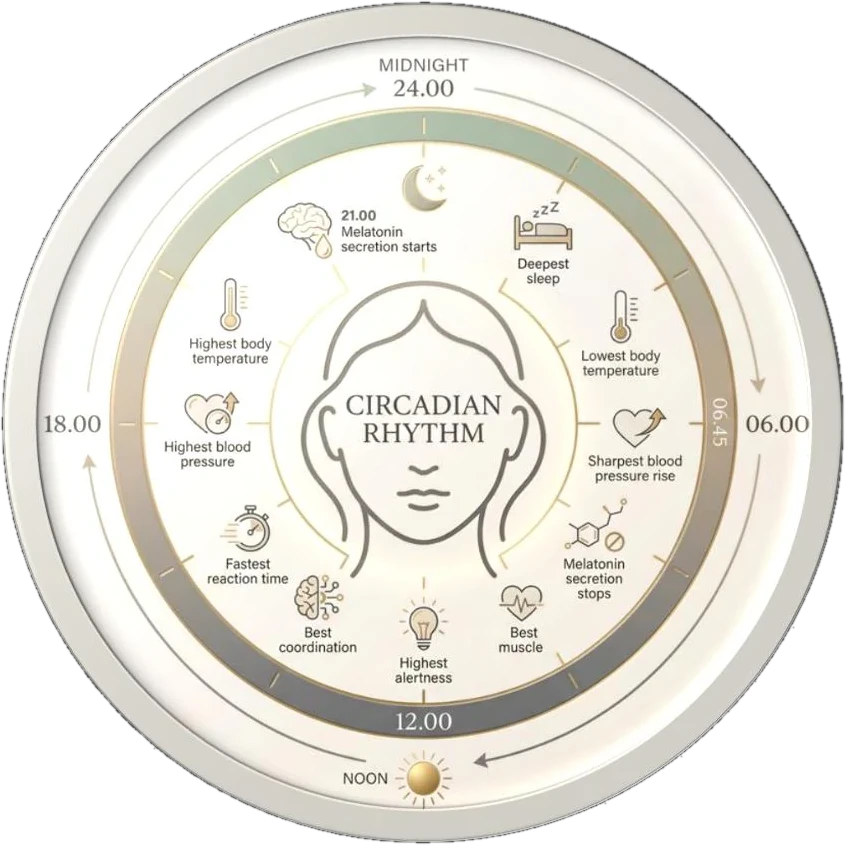
- 21:00 — Melatonin secretion starts
- Deepest sleep (night)
- Lowest body temperature (pre-dawn)
- 06:45 — Sharpest blood-pressure rise
- Melatonin secretion stops (morning)
- 10:00 — Highest alertness
- 14:30 — Best coordination
- 15:30 — Fastest reaction time
- 17:00 — Greatest muscle strength
- 18:30 — Highest blood pressure & body temperature
BlueZone philosophy · cultivating longevity
“Blue Zones” are the handful of places on earth — Okinawa, Sardinia, Ikaria, Nicoya, Loma Linda — where people routinely live past a hundred in good health. Longevity there is not the result of medicine or diet alone, but of environments that make the healthy choice the natural one. Keturah Al Ain translates that research into the master plan itself, so that the four habits most closely linked to a long, purposeful life are designed into daily routine rather than left to willpower.
Move Naturally
Longevity hotspots are built for constant, low-intensity movement rather than the gym. A fully walkable, car-free network of shaded sikkas and trails — every home within a five-minute walk of a park — makes gentle activity an unavoidable part of the day, from the morning walk to the evening majlis.
Eat Wisely
The world's longest-lived communities eat simply, seasonally and mostly from what grows around them. On-site community gardens, a farm-to-table souq and orchards of native Ghaf and Sidr give residents daily access to fresh, local, plant-rich food grown within the sanctuary.
Connect
Strong social bonds and a sense of belonging are among the strongest predictors of a long life. Public majlis spaces, plazas and shared gardens are placed to draw neighbours together and hold three generations of a family in easy, frequent contact.
Right Outlook
A slower pace and a clear sense of purpose lower stress and protect the mind. Circadian-aligned light, quiet meditation pods, prayer spaces and the calming presence of the desert landscape are composed to help residents downshift, rest deeply and rediscover meaning.
Stewardship
A sanctuary held in trust
Commitments that extend beyond the built environment and into the land, the culture and the people who share it.


Ecological Guardianship
Active regeneration of native desert flora and fauna toward net-positive biodiversity.
Cultural Custodianship
Empowering local communities to preserve and celebrate living heritage traditions.
Resource Circularity
Closed-loop water harvesting, greywater recycling and zero-waste construction protocols.
Resilient Engagement
Residents and guests become active stewards of the environment they share.
Archaeological heritageGuardians of a 5,000-Year Narrative
Building in the company of history
- Bronze Age Roots
- Direct lineage to the Hafit and Umm an-Nar periods, anchoring the project in deep history.
- The Falaj System
- Celebrating the ancient hydrological engineering that enabled life in the desert (UNESCO recognized).
- In-Situ Preservation
- A commitment to protecting artifacts and structures as “living museum” elements within the development.
- Cultural Continuity
- Bridging the past and future through respectful integration.
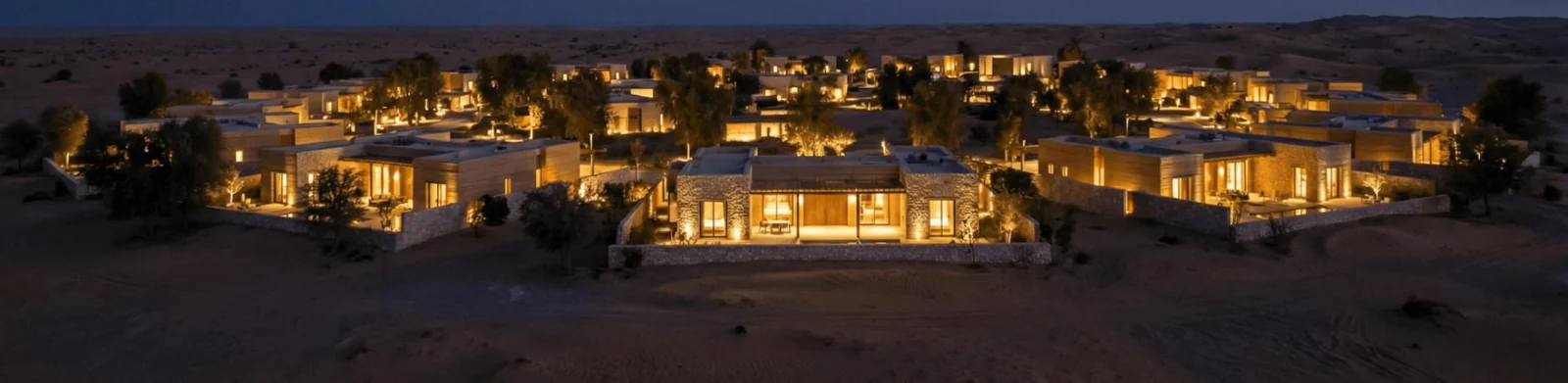
Keturah Al Ain — the awakening of a new life.